

Blog by Eva Skårner, SIE Vice President
SI CSW70 Delegate
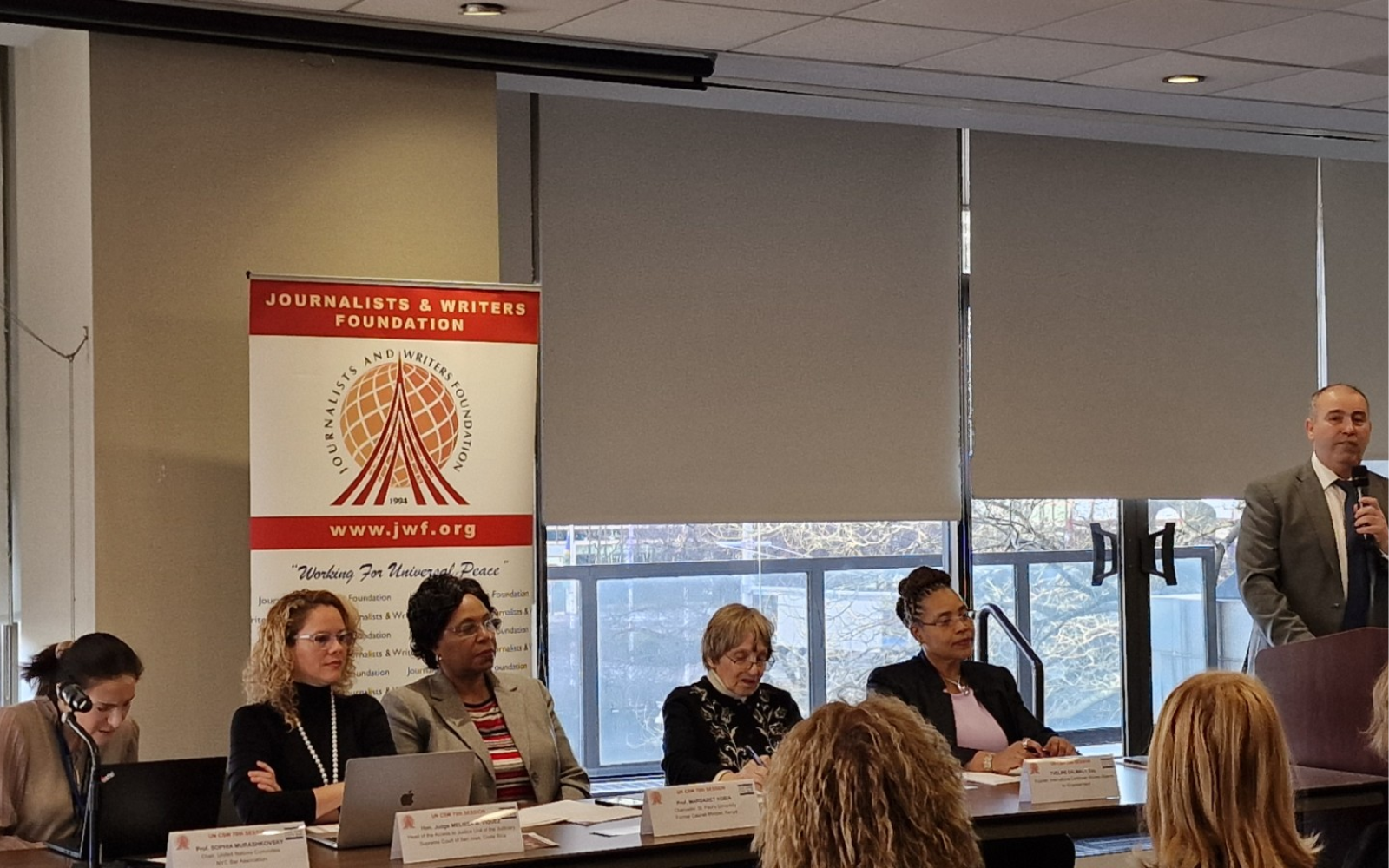
During Monday Morning March 9 at the Commission on the Status of Women (CSW70) in New York, I attended the parallel event “Ensuring Women’s Access to Justice and Addressing Structural Barriers,” hosted by the Journalists and Writers Foundation at the Church Center.
The discussion highlighted a reality that many Soroptimists around the world know well: legal rights for women often exist on paper, but not always in practice.
Moderator Professor Sophia Murashkovsky opened the session with a powerful observation: legal frameworks do not automatically translate into real justice. Laws may exist, yet structural barriers, social norms, and political realities often prevent women from accessing their rights. She reminded us why we gather at CSW. We do not travel here simply to admire New York’s buildings or cultural landmarks. We come because women’s rights are under pressure across the world.
Women who take public roles—as judges, journalists, activists, or leaders—face increasing threats. These threats can be digital, psychological, or physical. Many women are targeted simply because they advocate for equality and justice. As Murashkovsky put it, justice is still not designed for all.
Judge Melissa Benavides Viquez addressed the growing crisis of trust in democratic systems. When institutions fail to deliver justice, people begin to question democracy itself. One key issue is the continued underrepresentation of women in decision-making positions, including in courts and public institutions.
Her message was clear: a democracy without women in decision-making is not a democracy at all. Gender perspectives must be integrated into constitutions, legal systems, and digital justice systems. Strengthening international cooperation is also essential if we are to build systems that truly protect rights and promote equality.
Professor Margaret Kobia emphasized that gender inequality is not only a legal issue; it is deeply rooted in economic and social structures. Harmful norms and unequal access to resources shape women’s opportunities long before legal systems come into play.
She shared a striking example from Kenya, where women own only around one percent of the land. Such inequality in ownership and economic power contributes to broader societal problems, including violence and discrimination. Addressing gender equality therefore requires both legal reform and long-term societal change. As Soroptimists, we recognize the importance of empowering women economically as well as legally.
Another powerful contribution came from Andrea Barron, who works with individuals persecuted because of their sexual orientation. She intentionally refers to those affected as survivors rather than victims, emphasizing resilience and strength.
Barron described how sexual violence is frequently used as an additional form of torture against women activists. In some countries, anti-terrorism laws are misused to silence women who advocate for equal rights. Women may be arrested or prosecuted without evidence simply because they raise their voices for justice. Education itself can become threatening to those in power, as educated women are more likely to challenge injustice.
Finally, attorney Yveline Dalmacy addressed the gap between legal protections and lived reality. Even where laws exist to protect women, access to justice is often limited by geography, cost, and social stigma. Many women cannot afford legal support, do not know their rights, or are prevented by family members from seeking help.
Shame and stigma remain powerful barriers. When survivors of violence fear judgment from society, many crimes go unreported and perpetrators remain unaccountable.
For Soroptimists, these discussions resonate deeply with our mission: to improve the lives of women and girls through education, empowerment, and advocacy. Ensuring access to justice is not only about legal reform; it is about transforming systems and attitudes so that equality becomes a lived reality.
The challenges are immense. Yet the event also reminded us of the strength of collective action.
As Professor Murashkovsky expressed so vividly: the house may feel like it is on fire, but we still have our tools—integrity, determination, and the will to act.
And it is precisely this determination that continues to drive the global movement for women’s rights forward.









