

Blog by Evelyne Para, Soroptimist International Representative at UNESCO, Paris.
On the theme “From Vision to Impact: Redefining STEM by Reducing Gender Inequalities”, a hybrid event took place on February 11 2026, at UNESCO HQ in Paris, for the International Day of Women and Girls in Science.
Organised by UNESCO in collaboration with Women@Digital, this event called for greater participation of women in science to foster scientific, technological and innovative progress that is more ethical, inclusive, and relevant for society. The roundtables highlighted concrete actions and best practices that promote more inclusive ecosystems in science, technology, engineering, and mathematics (STEM) worldwide.
I had the opportunity to participate in the day’s discussions, and here is a brief summary.
Deconstructing Societal Stereotypes
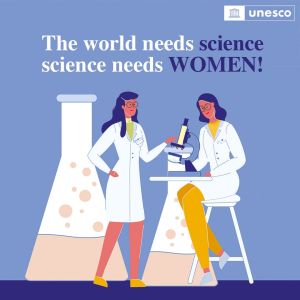
Women remain underrepresented in research worldwide – even today, they make up less than a third of researchers. Among the factors contributing to this disparity are cultural biases and gender stereotypes in science that are still deeply entrenched in many countries.
These stereotypes perpetuate misconceptions that boys outperform girls in mathematics and science, while girls and women are supposedly better suited to administrative or caregiving roles. This flawed view, rooted in the socialisation process, contributes to the belief that women lack the qualities required for careers as researchers or in other scientific professions.
These biases are perpetuated through unfair letters of recommendation exchanged among peers and the underrepresentation of women in scientific journals and conferences. Sexist prejudices discourage girls from considering scientific careers, they also have a negative impact on women’s self-perception, and many women continue to face obstacles that hinder their STEM careers.
Educate, Support, and Inspire
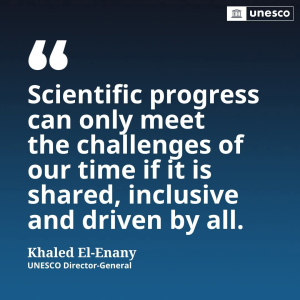
It is therefore essential to dismantle these gender stereotypes through targeted actions, particularly educational initiatives aimed at younger generations, to encourage girls and young women to confidently pursue STEM fields, make lasting progress, and ultimately lead. Girls’ education plays a crucial role in making scientific careers both attractive and accessible, instilling ambition and confidence in girls, and teaching them to “Dare.”
Several NGOs, such as Soroptimist International, are developing action programs at the regional and national levels to reward girls’ outstanding achievements in STEM disciplines through scholarships, awards, and other incentives, and to develop women’s skills and leadership in STEM, guided by three key principles: Educate, Support, and Inspire.
Recommended Actions
To achieve lasting progress towards gender equality in science, practical and coordinated action is required at every level — from education and public representation to policy and funding structures.
- Incorporate more discoveries and content related to women scientists into school textbooks, with illustrations, to establish from a young age a positive association between women and science and to acknowledge their contributions.
- Increase the presence of women scientists in the media, popular culture and public spaces to show the full diversity of scientific careers and dispel gender-based misconceptions.
- Organise and finance awareness-raising activities involving female scientists, enabling them to share their professional journeys in both formal and informal educational settings to support career guidance.
- Ensure equitable representation of women and men in councils, committees and working groups that shape national science policies and actions.
- Expand opportunities for women scientists to access research grants and funding, including international awards and regional programmes.
- Promote the establishment of global networks and platforms for women scientists to build meaningful professional connections worldwide.
In Conclusion,
We cannot afford to deprive ourselves of the talents of half of humanity: women advance science, and science advances the world.
Together, we must promote the profound impact of women in science: they conduct exceptional research, advance our understanding of the world, address global challenges, and inspire future generations, especially young women, to push the boundaries of knowledge and innovation.









