Blog by Berthe De Vos Neven, SI Representative to the United Nations in Geneva.
World Humanitarian Day began in 2003, after a bomb attack in Baghdad, Iraq, killed 22 humanitarian aid workers, including the UN Special Representative of the Secretary-General for Iraq. In 2008, the General Assembly adopted a resolution designating 19 August as World Humanitarian Day.
Being part of the UN also means paying tribute to those who are victims of violence while carrying out their work: serving the international community in need. Every year on 19 August, the UN family, communities, and civil society around the world pause to mark World Humanitarian Day.
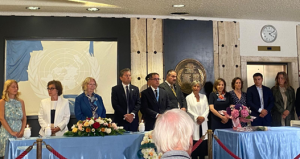
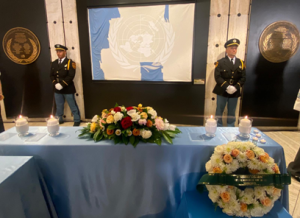
Last Tuesday at the UN in Geneva we learned that 2024 was the deadliest year ever recorded: 383 aid workers were killed, mostly local staff, helping their own neighbours and communities survive war, disaster, and hunger. Sadly, as of today, 19 August 2025, already over 260 more have been killed and another 160 injured or abducted. And the year is not yet over. The message was impossible to ignore: humanitarian workers are under attack like never before.
Each year we hear this same terrible reality. Every time the same message is repeated, and here lies the problem: this news no longer shocks the way it should. Humanitarian workers are not statistics. They are people who step forward when everyone else runs to safety. And right now, the world is letting them down.
A frustrating truth? Indeed. Because rules already exist, and International Humanitarian Law is clear: attacking aid workers is a crime. The UN Security Council’s Resolution 2730 lays out a path for accountability. What is missing is not law, but political will and courage.
That is why this year’s call from the UN is simple but urgent: #ActForHumanity. We all need to act:
Raise your voice – do not let attacks on aid workers pass in silence. Demand accountability in your communities and ask why perpetrators face no consequences.
Mobilise those around you – join marches, community actions, and initiatives. We need to stand up for those who stand up for others in crisis situations.
Break the silence – civil society can use its voice to ensure this crisis is seen and felt. Why not collaborate with artists, teachers, influencers, and others to create awareness?
At UNOG, and across the globe, the message was clear: “Honouring humanitarians means protecting them. Words and resolutions are not enough,” said Secretary-General Guterres in his report on 15 May 2025.