Blog by Alice Paola Pomè, SI Next Generation Representative
We’re coming home from the World Summit on the Information Society (WSIS) Forum 2026 with concrete actions to foster a digital future that include all women and girls.
Among the key priorities highlighted were closing the digital divide, ensuring equitable access to digital technologies, protecting human rights online, promoting gender equality, eliminating technology-facilitated violence, strengthening digital and AI skills, and advancing inclusive and responsible AI governance. These priorities are embedded within the vision of the Women and Girls Digital Empowerment Plan 2035, an initiative that calls on governments, international organisations, academia, civil society, and the private sector to work together to create a digital future in which women and girls are not only beneficiaries of technological progress but also leaders, innovators, and decision-makers driving digital transformation.
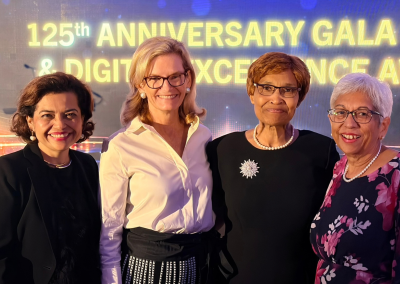
Bringing together representatives from governments, international organisations, academia, and civil society of different generations to strengthen the global commitment, during this session I had the honour of participating in this roundtable reflecting on the role of women and girls in this digital transformation.
The gender digital divide is no longer only about connectivity. It is about opportunity. It is about representation. It is about safety. And ultimately, it is about power. As technology is the most powerful forces that is shaping our societies by determining who has access to knowledge, who participates in the economy, who influences decisions, and more, it represents a revolution that remains incomplete for millions of women and girls yet.
Technology is never neutral. It reflects the values and priorities of those who design, govern, and manage it. If women and girls are absent from these processes, inequality becomes embedded into the very systems that are meant to empower us. However, the solution is not to slow innovation. The solution is to build better innovation.
First, reliable internet is a prerequisite. Second, we must invest in future-ready skills. We need to go beyond the digital literacy to give the opportunity to all women and girls to learn how to create them, govern them, question them, and improve them. Third, safety must become a design principle, not an afterthought. Fourth, human-centred digital governance is the mean to make innovation sustainable and trustworthy. Finally, also women and girls must be empowered to govern technology, not only empowered through it. The combination of these “must have” will ensure better decisions that emerge when different experiences, disciplines, and communities are represented. This is particularly important for the next generation, as young women and girls are not simply future leaders, they are already innovators, entrepreneurs, researchers, developers, activists, and changemakers. They are creating solutions for their communities, advancing scientific discovery, and redefining what leadership looks like in the digital age.
In this perspective, our responsibility is not to tell them what future to build; our responsibility is to remove the barriers that prevent them from building it. Indeed, the digital future should not simply include women and girls, but it has to be shaped by them.