Blog by Evelyne Para, SI Representative to UNESCO, Paris
Building on work carried out at UNESCO in 2025 to empower young people and support the agency’s Intergovernmental Hydrological Programme, a new meeting was held in June 2026 at UNESCO headquarters in Paris.
I had the opportunity to attend, and here is a brief summary.
The meeting aimed to strengthen youth participation in water governance, support their training, and foster access to professional opportunities in the sector. It provided a platform for young people to make their voices heard once again and helped prepare for the upcoming UN Water Conference, scheduled to take place in the United Arab Emirates from 2 to 4 December 2026.
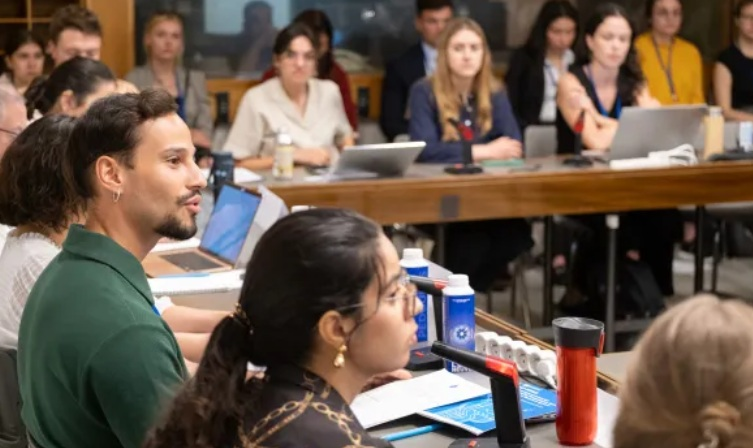
Strengthening youth participation in water governance
In the face of water insecurity, the effects of climate change, and mounting pressure on freshwater resources, new ideas and new leaders are needed.
Yet, although many young people are already active in their communities, they often face obstacles regarding education, employment, and participation in decision-making processes. Consequently, their knowledge, perspectives, and solutions remain underrepresented in the water sector.
Several NGOs value their engagement and encourage them to drive innovation and bring fresh perspectives to water-related challenges. UNESCO also supports these initiatives, recognising the contribution of these young people: “We are establishing a sustainable framework to ensure their voices, knowledge, and leadership help shape the future of global water security”, stated Abou Amani, Director of UNESCO’s Division of Water Sciences and Secretary of the Intergovernmental Hydrological Programme.
UNESCO’s Youth4Water initiative
To ensure the voices of young people are heard and recognised, Youth4Water places youth at the heart of action across three priorities defined by young people themselves: education and capacity building; career opportunities and innovation; and meaningful participation in water governance.
Through this initiative, UNESCO will help develop water-related learning pathways, strengthen youth networks, and foster intergenerational partnerships. Youth4Water will also connect young professionals with career opportunities, support youth-led research and innovation, and create new platforms to facilitate their participation in decision-making processes.
Various projects will receive support—including financial backing—through regional hubs in Africa, Asia, Latin America, Europe, and the Middle East and North Africa. These projects aim to support the development of water-related educational pathways for young people and to equip them with the knowledge, tools, and networks needed to contribute meaningfully to the advancement of scientific knowledge regarding water.
These projects also aim to promote gender equality and ensure the meaningful inclusion of marginalised youth by integrating indigenous and local knowledge systems. Cross-border scientific collaboration projects fostering peace will be facilitated, as well as youth-led, evidence-based initiatives aimed at protecting water and water infrastructure from pollution, degradation, and the consequences of conflict.
In conclusion,
UNESCO’s “Water and Youth” Strategy envisions a future where young people are equipped to address interconnected water-related challenges and where their transformative potential is harnessed to foster sustainable and equitable water governance and management, thereby contributing to the achievement of the 2030 Agenda, particularly SDG 6.
Building on this Youth4Water initiative, Soroptimist International and other NGOs will also be able to develop partnerships with UNESCO to expand opportunities for collaboration worldwide.