

Blog by Hana Smith, SI Global Policy Advisor
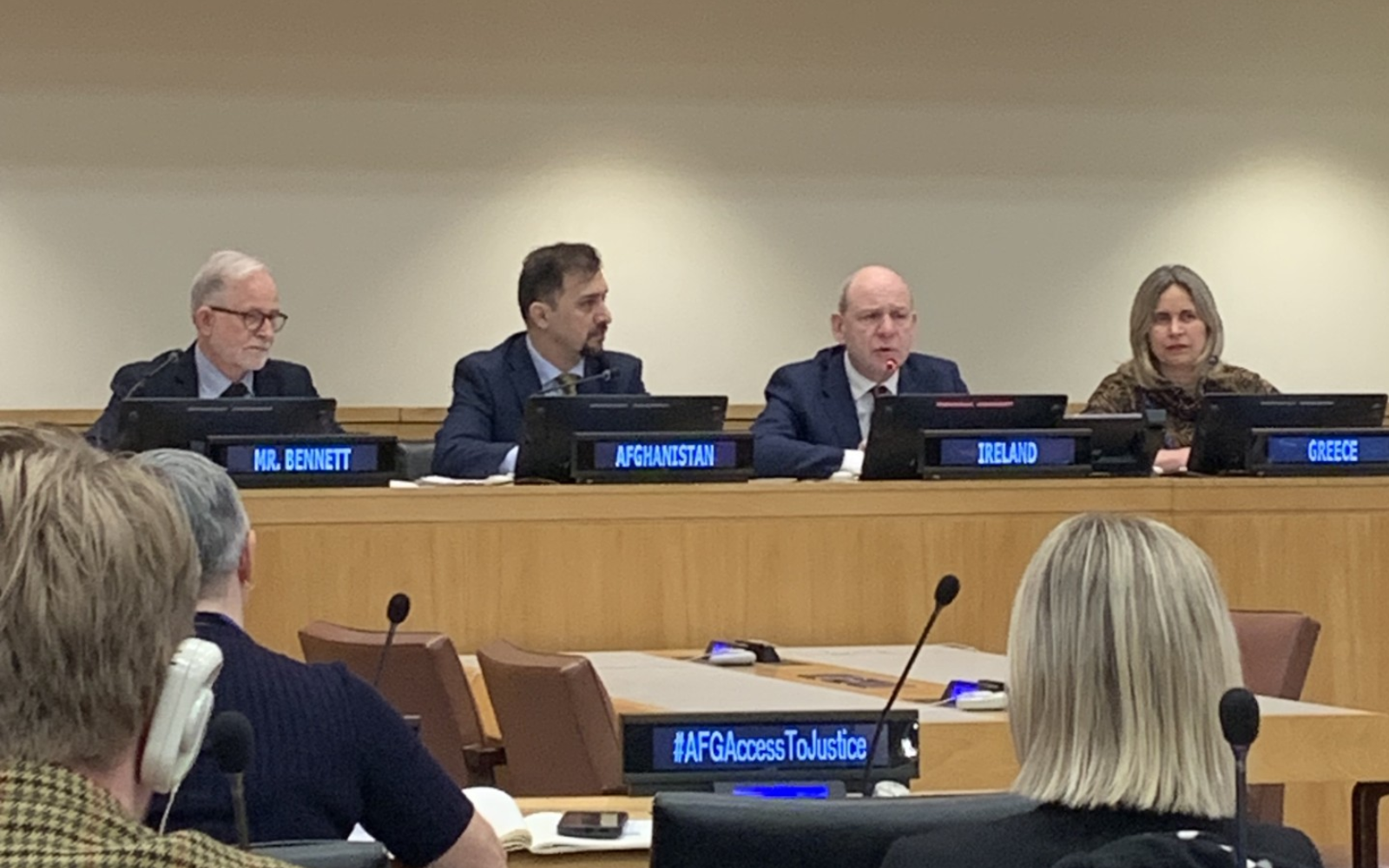
At the 70th Session of the UN Commission on the Status of Women, government officials, UN experts and civil society leaders issued a call to confront the escalating system of repression facing all women and girls in Afghanistan. The session’s discussions concluded that the Taliban have constructed the world’s most comprehensive architecture of gender-based oppression, amounting to a system increasingly recognised as gender apartheid.
Interventions from government ministers, ambassadors, UN mandate holders and Afghan civilians delivered a consistent message – that Afghanistan’s crisis cannot be normalised, minimised or allowed to fade from international attention. Delegates highlighted how the Taliban’s near 200-decrees form a deliberate machinery of exclusion that removes Afghan women from public life, criminalises their basic freedoms, and denies them access to justice. This repression is not cultural or religious – it is institutionalised violence.
Beyond Legal Systems: The Collapse of Everyday Rights
Speakers argued for a holistic understanding of justice in Afghanistan – one that encompasses education, health, freedom of movement and dignity, beyond only courts and legal mechanisms. Yet every dimension of this broader justice ecosystem has been dismantled. Formal protections like female judges, women lawyers, the End Violence Against Women framework, and safe shelters have been abolished. Women are often barred from speaking in legal proceedings and others face insurmountable economic, cultural and linguistic barriers to legal aid. The Taliban’s repurposing of justice institutions has weaponised the entire legal system against all women and girls.
Participants also stressed that any effective international response must recognise Afghanistan’s diverse realities, including the ethnic targeting of communities such as the Hazara. Generations of marginalisation and exclusion continue to shape the experiences of women and girls from minority groups. Failing to acknowledge this intersectional dimension risks rendering their suffering invisible.
Lived Experience Under Taliban Rule
Civil society interventions highlighted the profound personal and collective impacts of Taliban rule. One speaker, a survivor of detention and torture for resisting a forced marriage imposed on his wife, spoke about the lasting physical and emotional trauma he carriers. His testimony was raw, painful, and deeply human, bringing the room to a standstill and evoking a standing ovation. His story cut through policy language, exposing the brutal human cost of Taliban rule and underscoring the urgent, undeniable need for justice pathways that genuinely protect all those at risk.
More broadly, civil society experts emphasised that most cases of violence inside Afghanistan remain unreported due to fear, stigma and the lack of safe channels, with these scenarios being exacerbated in remote and rural areas. Funding cuts have forced many grassroots organisations to close, further reducing all women’s access to any support that remains. Yet even under this repression, Afghan women continue to seek informal avenues to challenge intimate partner violence and harmful practices such as child, early and forced marriage.
The Case for Coordinated International Action
Throughout this meeting, participants called for a comprehensive, coordinated international strategy. Priorities included strengthening accountability mechanisms, fully funding humanitarian and civil society work, expanding support to countries hosting Afghan refugees, advancing women’s economic empowerment, and establishing clear international benchmarks to prevent further rights erosion. Central to every recommendation was the imperative to centre the voices, agency and leadership of all Afghan women and girls, including those from minority communities, in shaping the country’s future.
The situation in Afghanistan is not a peripheral issue – it represents the systematic removal of fundamental rights from an entire population of women and girls. The global community has both a legal obligation and a moral responsibility to act. Recognising and codifying gender apartheid, many argued, is a critical step toward naming and confronting the totalising system of oppression in Afghanistan, imposed by the Taliban.
Justice for all Afghan women and girls demands sustained global solidarity, principled pressure and determined action. Their struggle is a human struggle, and it must not be met with silence or complacency.









