

Blog By Berthe De Vos Neven, SI Representative to the United Nations in Geneva.
A historical day! On June 24th, during its 91st session, the Committee on the Elimination of Discrimination against Women (CEDAW) welcomed the former Afghan officials and women’s right leaders in exile – marking a first-of-its-kind precedent within the United Nations (UN) treaty body system. The Taliban were invited to participate informally, but no response was received.
We need to remember that Afghanistan has ratified CEDAW in 2003 and remains bound by it legally bound by its provisions, despite changes in its political leadership. Article 2, in particular, states the obligation of a member states to eliminate which further clarifies the application of CEDAW obligations, explicitly addresses conflict and post-conflict settings. This recommendation reinforces that Afghanistan’s obligations remain valid even amid the current regime change and ongoing political instability.
Afghanistan also ratified the UN Charter where article 1(3) explicitly requires member states to “promote respect for human rights and fundamental freedoms.” During the recent review, CEDAW Chair Ms. Haidar underscored the importance of these commitments, invoking principles of accountability and solidarity, which hold the current authorities responsible for protecting and promoting women’s rights.
Moreover, Afghanistan ratified the UN Security Council Resolution 1325, which emphasizes the critical role of women in peace, security, and decision-making. This resolution is particularly relevant, given the Taliban’s ongoing exclusion of women and girls from public life.
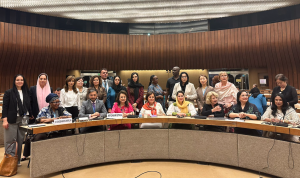
CEDAW Review of Afghanistan
The CEDAW experts conducted a formal review of Afghanistan’s compliance with its obligations under the Convention and reviewed the fourth periodic report, submitted by the Permanent Mission of Afghanistan to the UN in Geneva.
This is really an exception as it is the first treaty body review since the Taliban’s return to power in 2021 and, as mentioned, this landmark review took place without participation from the de facto Taliban authorities (who are, by the way, not recognized by the UN.)
The Committee emphasized that international obligations remain binding regardless of changes in political leadership, reaffirming Afghanistan’s commitment to the CEDAW Convention. The session underlined the UN’s legal, moral, and humanitarian responsibility to uphold the rights of all Afghan women and girls amid extreme gender-based repression.
This CEDAW review sends a strong message to us all: human rights obligations transcend political regimes, and the international community has a responsibility to respond when de facto authorities suppress fundamental freedoms.
CEDAW remains committed to its mandate and stands with all women and girls of Afghanistan by calling on all stakeholders, including the international community, to uphold their obligations under international law so must SI. We give a global voice for women’s empowerment, and are uniquely positioned to amplify this momentum, challenge gender apartheid, and ensure Afghan women are not forgotten.
Recommendations for Action
The international community has a crucial role to play in standing with Afghan women during this time of crisis. By amplifying the recommendations of global human rights bodies—like those from the CEDAW Committee—and sharing them widely, we can shine a light on the ongoing violations of Afghan women’s rights. These efforts must be shaped by the voices of Afghan women themselves, especially those living in exile, to ensure they are both grounded and globally resonant.
At the same time, governments and NGOs can apply diplomatic and legal pressure to hold perpetrators accountable and push for the enforcement of international human rights obligations. Just as importantly, we must create space for Afghan women to lead—offering them the resources, protection, and platforms they need to share their stories, advocate for change, and inspire global solidarity.









