


Blog written by Evelyne Para, SI Representative at UNESCO, Paris.
Progress toward gender equality has transformed the lives of women and girls around the world. But today, it is losing momentum. Reports from more than 150 governments confirm this: on 2025, women’s rights are in decline in nearly one in four countries, gender-based violence is on the rise, the digital gender divide is widening, and more than 600 million women and girls now live in conflict zones. This situation threatens to reverse the hard-won gains of the past thirty years.
What about the role of women in diplomacy? On the occasion of the celebration of the International Day on 24 June, dedicated to Women’s Leadership in Diplomacy, we wanted to take stock of the situation.
A worrying regression and systemic obstacles
Despite global commitments to gender equality, women remain largely underrepresented in diplomacy and political leadership, with recent trends showing a worrying decline.
Some figures, taken from UN Women reports:
- On 2025, only 25 countries will have a woman at the head of state or government.
- Although 2024 will see several major firsts, including the election of the first female presidents in North Macedonia, Mexico, and Namibia, 106 countries have yet to have a woman at the helm.
- Women represent 22.9% of ministers worldwide, with underrepresentation in key areas such as foreign affairs and defense.
- The proportion of women in parliaments has more than doubled since 1995, but today nearly 75% of parliamentarians are still men.
- Women represent only 21% of permanent representatives to the UN, with only 7% of all ambassadors since 1947, and 73 countries having never appointed a female representative.
- Between 2020 and 2023, women were absent from 8 out of 10 peace talks and 7 out of 10 mediation initiatives. Yet, it is clearly recognised that peace is more sustainable when women are at the negotiating table.
Bold measures are needed
The Human Rights Council highlights systemic barriers, including deep-rooted discrimination in economies and societies, gender stereotypes, and political violence, which continue to exclude women from high-level decision-making positions.
The allocation of ministerial portfolios reveals the persistence of gender bias. Women continue to be primarily entrusted with ministries in the areas of gender equality and social affairs. Key ministries, such as foreign affairs, finance and budgetary affairs, home affairs, and defence, continue to be predominantly held by men.
To achieve meaningful and equal representation, and to deliver on the promises of the “Platform for Action 30 years after Beijing” and the Sustainable Development Goals, bold measures are being discussed.
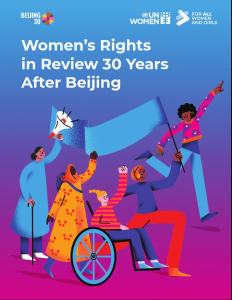
The most frequently cited measures are: implementing quotas because they open doors for women in the political sphere; appointing women to leadership positions; promoting women engaged in global diplomacy; deploying mentoring programs; implementing measures to combat social norms and stigma that hold women back; and strengthening measures to combat harassment and violence, both online and offline.
Through programs implemented in educational settings and academic institutions across countries, national parliaments must become essential partners with NGOs and civil society representatives to strengthen girls’ education, empowerment, and women’s diplomatic engagement. The goal is to foster a global environment where women and girls can thrive, and for global diplomacy to be not reserved for a few, but increasingly shaped by diverse voices advocating for peace, justice, and equality for all.
This is the meaning of Resolution A/RES/76/269 adopted by the United Nations General Assembly, which declared June 24 as International Women in Diplomacy Day. This Day celebrates the determination, leadership, and essential contribution of women to building a more peaceful, just, and inclusive world.
It is important that NGOs mobilise to raise awareness among the general public about this International Day celebration and the positive role women can play in diplomacy, especially in a world so divided today by wars and the “powers of force.”
In conclusion,
The NGOs, like Soroptimist International, committed to defending women’s rights and their involvement in diplomacy, share the wishes expressed by two women on International Women in Diplomacy Day on 24 June 2025:
– Sima Bahous, Executive Director of UN Women: “The time for half-measures is over; it is time for governments to act now to guarantee women an equal place at all tables where power is exercised.”
– Amina Mohammed, Deputy Secretary-General of the United Nations: “We must all do everything possible to ensure that women are present at the negotiating table, that our voices are heard, and that our contributions are valued.”









